Growing a Movement for Bottom-Up Peatland Protection

Growing a Movement for Bottom-Up Peatland Protection

Nam Lolwe (Lake Victoria). Credit: Caroline Vitzthum.

Reflections from the Third Biennial International Workshop of the Venice Agreement on Peatlands, Kisumu, Kenya.

From 2–5 June 2026, the Venice Agreement on Peatlands (VA) gathered in Kisumu, Kenya, for its Third Biennial International Workshop. Hosted by Ecofinder Kenya in the papyrus wetlands of Nam Lolwe / Lake Victoria, the gathering brought together more than 40 peatland custodians, scientists, artists, Indigenous leaders, conservation practitioners, policymakers, community organisers, and cultural workers from Africa, Europe, and the Americas. 

The workshop was made possible through the support of the IUCN UK Peatland Programme, the Andrea von Braun Foundation, the United Nations Environment Programme’s Global Peatlands Initiative, and the Peat4People consortium. This support enabled participants from different regions and disciplines to meet, learn directly from the wetlands and communities around Kisumu, and strengthen an international movement rooted in local peatland realities. 

As the Venice Agreement Organising Committee, we approached the gathering not as a conventional conference, but as a space for reciprocal learning. Our aim was to bring different forms of knowledge into conversation: community experience, Indigenous and local knowledge, scientific research, conservation practice, art, education, policy, and activism. 

Timed to coincide with World Peatlands Day on 2 June and World Environment Day on 5 June, the workshop placed African peatlands and the communities who care for them at the centre of an international conversation about peatland protection, restoration, justice, and reciprocal care. 

The gathering built on previous Venice Agreement workshops in Venice in 2022 and Torres Vedras, Portugal, in 2024. It also drew on knowledge and experiences shared through 18 local Underground Workshops held across peatlands around the world.

Group of people wearing grey t-shirts with the words 'Actioning Venice Agreement'.

Participants of the 2026 Venice Agreement workshop in Kisumu. Credit: Caroline Vitzthum.

Worldwide Underground Workshops 

Local custodians are the living heart of peatland conservation. For this reason, the Venice Agreement’s international gatherings are preceded by Underground Workshops organised within individual peatland landscapes. 

These workshops create spaces for communities to explore their own local peatland realities, identify threats and opportunities, and gather practical tools for protection. They also allow knowledge to travel between places without assuming that one approach will work everywhere. 

Ahead of the Kisumu gathering, 18 Underground Workshops took place in 21 countries, involving a wider network of 277 peatland custodians and collaborators. From Argentina to Uganda and from Australia to Norway, participants activated local action while contributing to a broader movement of trans-local solidarity.

The experiences emerging from these workshops shaped the conversations in Kisumu. They reminded us that the international gathering was only one part of a much wider process, rooted in the everyday work of communities caring for peatlands in many different ecological, political, and cultural contexts. 

Four days of exchanging knowledge in Kisumu 

Day 1: Showcasing African peatlands 

The workshop began on World Peatlands Day with a showcase of African peatlands and conservation initiatives. 

Participants from Kenya, Uganda, Tanzania, Rwanda, and the Congo Basin shared experiences of the landscapes and communities with which they work. Their presentations highlighted the remarkable diversity of African peatlands, as well as the challenges they face, including drainage, agricultural expansion, limited visibility, data gaps, and the need for conservation approaches grounded in local knowledge. 

The gathering received an official welcome from Judith Oluoch, County Executive Committee Member for Environment, Water, and Climate Change in Kisumu County. She emphasised the importance of the wetlands along Nam Lolwe / Lake Victoria as shared ecosystems of regional and global significance and called for collective action across communities, sectors, and national borders. 

Throughout the day, speakers returned to the importance of making African peatlands more visible within global research, policy, and conservation discussions. At the same time, they stressed that this visibility must not come at the expense of local languages, lived knowledge, and community ownership.

Person stood a lectern holding a microphone with a large screen in the background.

Welcome speech by Judith Oluoch, County Executive Committee Member for Environment, Water, and Climate Change in Kisumu County. Credit: Caroline Vitzthum.

Day 2: A Living Menu of How-Tos 

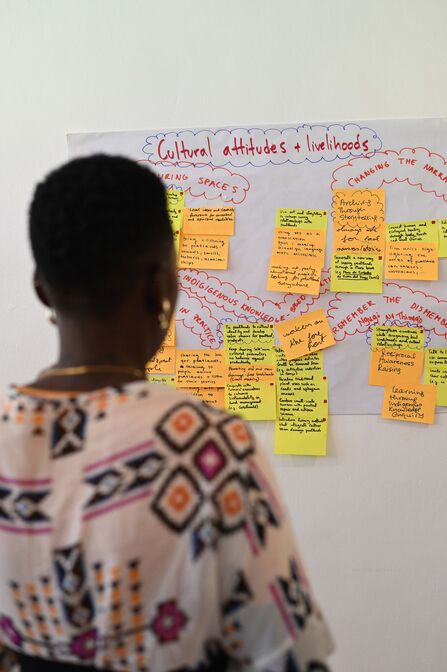
The second day focused on creating a shared Living Menu of How-Tos: an evolving collection of practical, community-led approaches to peatland action.

Participants reflected on how the Venice Agreement community could better support local conservation efforts and strengthen connections between peatland communities around the world. Conversations focused on how knowledge, experiences, and practical tools could be shared across different contexts, recognising that peatland protection depends on many interconnected forms of work – from restoration and scientific research to community organising, education, cultural practice, legal innovation, and creative communication. 

We chose the idea of a menu rather than a manual because no single method can respond to every peatland. Instead, the Living Menu offers approaches that can be adapted, reimagined, and built upon according to local ecological, cultural, and political realities. 

The workshop also marked the launch of the Peatland Communities Map, part of the VA Commons – a shared digital platform for community exchange, peatland education, and transdisciplinary collaboration. Bringing together materials, stories, research, artistic practices, organising tools, and educational resources emerging from peatland communities, the platform will support the continued development of the Living Menu beyond the workshop and make visible the diversity of people, places, and practices involved in caring for peatlands.

Day 3: Learning from Dunga Swamp 

On the third day, Ecofinder Kenya welcomed participants to Dunga Swamp, the papyrus wetland and local community at the heart of the organisation’s conservation work. 

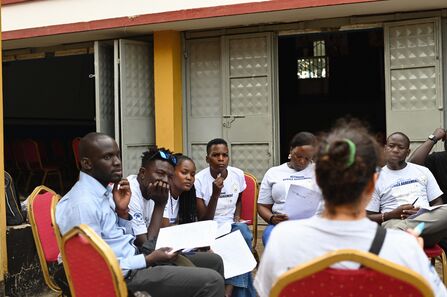
Community and conservation workers introduced participants to the relationships between wetland ecology, livelihoods, and everyday life in Dunga. Local fishermen and women spoke about their experiences of living and working alongside the swamp, allowing participants to understand the wetland through the perspectives of those most closely connected to it. 

This visit was important because it moved the gathering beyond abstract discussion. Participants encountered Dunga as a living social and ecological landscape, shaped by livelihoods, culture, conservation, environmental pressure, and long histories of human interaction. 

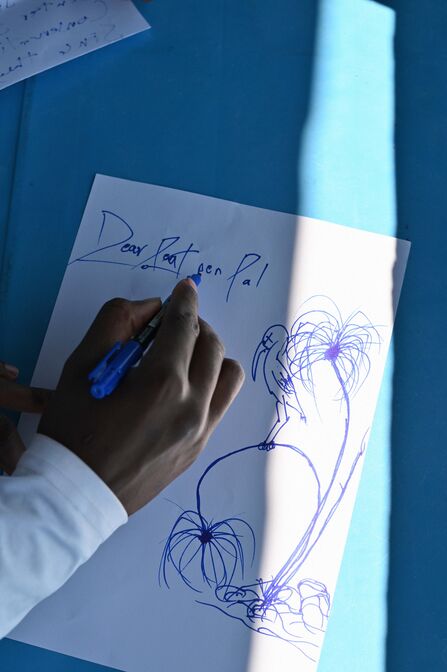
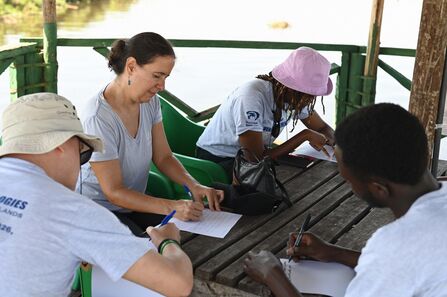
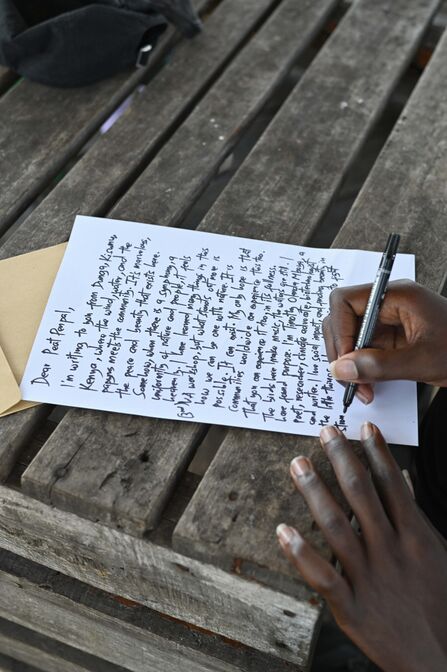
At the Dunga Wetland Education Centre, participants also took part in Peat Pen Pals, an initiative run by RE-PEAT in collaboration with Ecofinder Kenya. Participants wrote letters to unknown pen pals, sharing what makes their local peatland special through words, drawings, and other forms of expression. Around 50 letters were created, with half travelling to Chile and half to the UK.

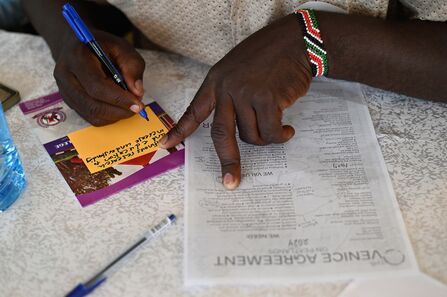
Later that day, participants reviewed the Venice Agreement Community Framework, a proposal for the community-based organisation of the network and for shared principles of mutual care, accountability, and collective responsibility.

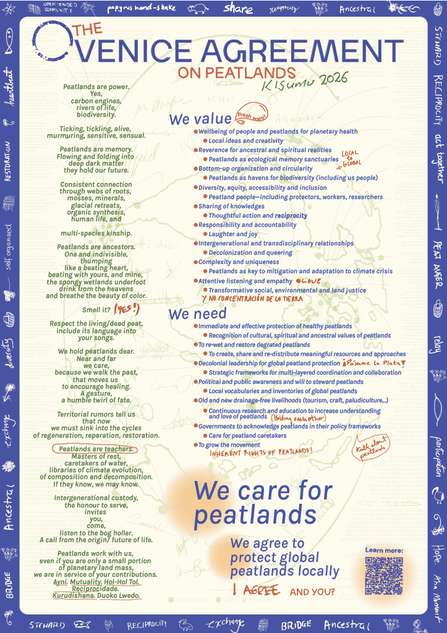
Through drawing and mark-making, participants also reflected on their experiences of the workshop. Their words, gestures, marks, and visual responses were gathered to inform the design of the 2026 Venice Agreement poster, created by designer Rosario Ureta in collaboration with participants. Redesigned through each biennial gathering, the poster does more than document the event – it carries traces of the relationships, questions, and experiences that emerged in Kisumu, becoming a collective record of the gathering itself. 

The internal programme concluded with a ceremony of reflection and commitment. Participants were invited to consider what they were taking from the gathering and what they could return to the Venice Agreement community, to the local hosts, and to the peatlands that had brought everyone together. 

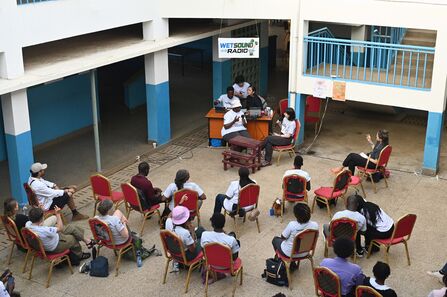
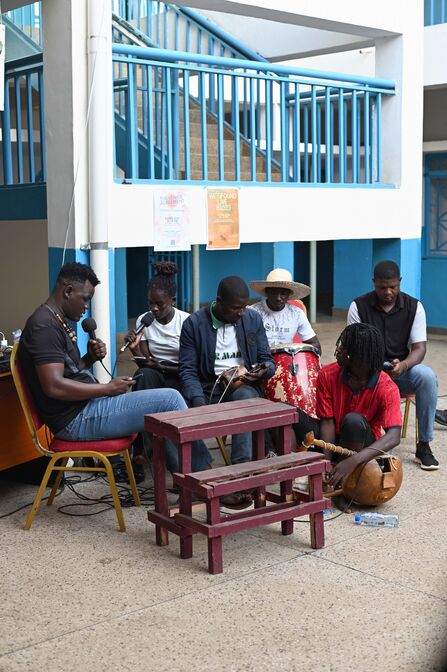
The day concluded with the public WETSOUND Live Radio Show, broadcast from the Mama Grace Onyango Social and Cultural Centre in Kisumu. Initiated by Sensing Peat and artist and radio poet Yasmeen Al-Qaisi, in collaboration with the Institute of Multi Species Singing, Ecofinder Kenya, Radio Nam Lolwe 97.3 FM, pantea, and international radio partners, WETSOUND wove together stories, music, field recordings, and conversations from the workshop, creating a lasting sound archive that is now available online.

Day 4: Visiting Yala Swamp 

The final day took participants beyond Kisumu to Yala Swamp, one of Kenya’s largest freshwater wetlands and an ecologically significant peat-forming landscape on the northeastern shores of Nam Lolwe / Lake Victoria. 

Participants learned about the wetland’s diverse flora and fauna, its role in water regulation and flood mitigation, and its importance as a habitat for birds, fish, reptiles, and plants. 

Fed by the Yala River, the swamp also acts as a natural filter, supporting water quality and the livelihoods of surrounding communities. At the same time, participants witnessed the pressures facing the ecosystem, including drainage, land conversion, and large-scale agricultural development. 

A visit to nearby sugarcane plantations offered a visible reminder of the competing demands placed on wetlands and the difficulties of balancing immediate economic pressures with long-term ecological health.

Group of people stood on a path next to tall vegetation.

Field trip to Yala Swamp, one of Kenya's largest freshwater wetlands, as part of the 2026 Venice Agreement workshop. Credit: Caroline Vitzthum.

A participant reflection 

Joshua Amaitum, a peatland community worker and conservation expert at the Food and Agriculture Organisation of the United Nations, joined the workshop from Uganda through the Peat4People project. 

Reflecting on the gathering, he said:

There is a need for robust efforts to raise the visibility of African peatlands; establishing context-specific definitions and generating reliable, comparable data on these peatlands are paramount first steps. Peatlands ought to be understood through local vocabularies, and their protection should be grounded in local knowledge, systems and lived experiences to strengthen local action and ownership.

He also highlighted the role of young people, media, and artistic practice in conservation:

Youth can play a key role though on-the-ground conservation, community education, scientific research, and technology-driven advocacy. The VA gathering featured WETSOUND Radio, demonstrating how media and the arts are valuable tools for raising awareness of peatlands as spaces of deep cultural, ecological, and ethical significance.

Looking ahead: Chiloé 2028 

The relationships, experiments, and commitments emerging from Kisumu will continue through the initiated Underground Workshops, the VA Commons, the Living Menu of How-Tos, the WETSOUND archive, and the work of participating communities and organisations. 

In 2028, the Venice Agreement will return to Chile, where many of its earliest conversations first took root. The Fourth Biennial International Workshop will take place on the island of Chiloé in southern Chile. Like Kisumu, Chiloé will not be an endpoint. It will be another moment in an ongoing process of cultivating relationships between people, places, and peatlands. 

We invite readers to explore the Venice Agreement website, discover the Peatland Communities Map, listen to the WETSOUND recordings, and learn more about the growing international community of peatland custodians.

Acknowledgements 

The 2026 gathering in Kisumu and the accompanying global Underground Workshops were organised by the Venice Agreement Organising Committee: Antonieta Eguren, Camila Marambio, Caroline Vitzthum, Cisca Devereux, Fernanda Olivares, Leonard Akwany, Miguel Geraldes, Nicole Püschel, and Suza Husse. 

The workshop was organised together with Ecofinder Kenya, RE-PEAT, WCS Chile, Sensing Peat, the Michael Succow Foundation (partner in the Greifswald Mire Centre), Hach Saye, W-U-Replay, and the United Nations Environment Programme’s Global Peatlands Initiative

It was made possible with the support of the IUCN UK Peatland Programme, the Andrea von Braun Foundation, the United Nations Environment Programme’s Global Peatlands Initiative, and the Peat4People consortium (comprising Deutsche Gesellschaft für Internationale Zusammenarbeit (GIZ), the Food and Agriculture Organisation of the United Nations (FAO), the Greifswald Mire Centre (GMC) and the Michael Succow Foundation).