
A workshop during our 2023 conference. Credit Jane Akerman
Conference 2026: Day 3 Programme (11th June)
Swansea University Bay Campus, Wales
Day 3 of #PeatConf26 features a diverse programme of plenaries, parallel topic deep dives and the presentation of this year's Lindsay Peatland Conservation Award.
This year, we’re also collaborating with the Landscape Finance Lab to deliver their Peatland Finance Collective in-person workshops, which are open to all delegates. The Peatland Finance Collective is a Community of Practice formed in 2023 to bring together peatland landscape restoration teams from across the UK and Ireland. Through in-person workshops (Edinburgh 2023, Dublin 2023, Leeds 2025, Exeter 2025) and virtual convenings, it facilitates peer learning on finance challenges, tools and best practice. It is coordinated by the Landscape Finance Lab with support from WaterLANDS.
Sessions take place in the Great Hall at Swansea University Bay Campus, with stunning views of Swansea Bay from the exhibitor galleries and the beach a stone's throw away.
Ticket sales have now closed.
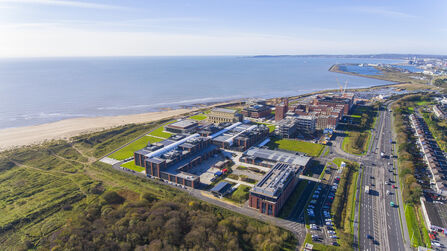
Swansea University Bay Campus. Credit: Swansea University.

The Great Hall viewed from the beach at Swansea University Bay Campus.

The outside bar at The Great Hall.
8.30 - 9.10am Day 3 delegate registration (Great Hall Foyer)
Refreshments (East & West Galleries)
9.15 - 10am Opening plenary (GH043)
10 – 10.25am Refreshments (East & West Galleries)
10.30am – 12.30pm AM topic deep dives
12.30pm Lunch (East & West Galleries)
1.30 – 3.30pm PM topic deep dives
3.30pm Refreshments (East & West Galleries)
4 – 4.45pm Closing plenary (GH043)
4.45 - 5pm Lindsay Peatland Conservation Award (GH043)
Opening Plenary
Unlocking Private Finance for Peatland Restoration: From Roadmap to Reality
As public funding for peatland restoration faces growing pressure, private capital is emerging as a critical complement, but navigating the landscape of investment mechanisms, carbon markets, and blended finance models is far from straightforward.
This plenary session provides both a grounding for those newer to the finance theme and an opportunity to explore what is working on the ground. Drawing on key findings from the 'Financing European Peatlands: A Roadmap to an Institutional Asset Class' report, we will set the scene on why private finance matters for peatland restoration and what conditions are needed to make it flow.
The session will explore the distinction between public and private funding pathways, highlight established mechanisms such as the Peatland Code, and draw on real examples from Moors for the Future Partnership, pointing to what scaled uptake could look like across the UK and Europe.
The session will close with open Q&A, creating space for discussion across the room.
Chair
Rolf Hogan | Landscape Lead | Landscape Finance Lab
Speakers:
Matt Robinson | Strategic Finance Advisor | Landscape Finance Lab
Renée Kerkvliet-Hermans | Peatland Code Manager | IUCN UK Peatland Programme
Matthew Scott-Campbell | Partnership Manager | Moors for the Future Partnership
AM Topic Deep Dives
Our morning parallel sessions include a wide choice of knowledge sharing sessions, discussion-based deep dives and creative workshops exploring how we fund, measure and make informed decisions about peatland restoration and sustainable management. We'll also look at career pathways in the peatland sector and the pressures faced by peatlands from climate change, peat extraction and other land use pressures.
If you have registered for a Full or Day 3 conference ticket, we'll send you an email in May with instructions on booking your choice of topic deep dive. Please choose ONE morning session.
Mapping Peatlands to Protect Them - FULLY BOOKED
Please note: This workshop will be run as a field trip to nearby Crymlyn Bog. The approximate timing is 9am to 12pm, which means missing our opening plenary. Transport will be provided from Bay Campus, outside the Social Hideaway on Severn Way.
Itinerary - transport with Cymru Coaches minibus
Time Location
9:15am Depart Bay Campus
9:30am Arrive Crymlyn Bog
11:45pm Depart Crymlyn Bog
12:00pm Arrive Bay Campus
Mapping the location, depth and condition of peat is vital if we are to raise its profile, ensure peatlands are preserved and target scarce resources towards the best practicable restoration projects. The England Peat Map (EPM) was published in May 2025, and we are now in a second stage of works investigating ways of increasing model accuracy. An important aspect of this is testing modelling approaches against data collected in the field.
In this workshop, the EPM team will introduce their field survey protocol and investigate ways of ensuring that measuring peaty soil presence and depth is as reliable as possible. We will be taking the EPM field equipment (peat probes, corers, GPS units) on site and asking participants to help us answer questions such as:
- What are the best methods for checking for the presence of organic soils in the field?
- How can we ensure consistency of method between different surveyors?
- How can we be confident that we have probed to the bottom of a peat layer?
- What about dryer peats that can be hard to push a probe through?
- How do we ensure confidence in geospatial coordinates?
- What are the best ways of compiling standardised data whilst in the field?
Participants will be encouraged to have a go with the equipment, compare their methodologies and answer the questions above. They are also welcome to bring any equipment themselves that they deem small enough to carry, which could include phone or tablet apps for recording and storing measurements.
The site: Situated only a few minutes from Swansea University Bay Campus and flanked by former landfill sites, motorways, remnants of oil, coal and copper industries and an extensive network of canals, Crymlyn is living proof that even when faced with challenges such as these, nature still finds a way! The Crymlyn Nature Reserve is approximately 300ha in size and comprises excellent examples of fen, transition mire and quaking bog habitats.
Workshop facilitators
Sarah Lamb | England Peat Map - Higher Officer | Natural England
Anne Stefaniak | Principal Officer | Natural England
Workshop is supported by
Mark Bond | Communications & Engagement Officer | LIFEquake NRW
Gareth Thomas | Project Manager - LIFEquake | NRW

Soil Core, Cambridgeshire, credit Natural England
Early Career Pathways in Peatlands: Research, Careers and Connection (GH029)
The UK peatland sector has expanded rapidly in recent years, driven by ambitious restoration targets that rely on strong science, policy, practice and finance. Alongside this growth is a diverse and expanding network of early career researchers and professionals navigating different pathways into peatland-related work.
This interactive session creates a dedicated platform for early career professionals to:
- Share emerging peatland research and applied work at a national conference.
- Hear honest reflections on different career pathways across science, policy and practice.
- Build peer-to-peer networks and connections with others working in the peatland sector.
Through short talks, career stories, facilitated discussion and an informal networking activity, the session aims to support confidence, visibility and connection among early career peatland professionals.
Speakers / Panel
Alice Whittle | PhD Candidate | Derby University
Kieran Boyd | PhD Candidate | Queen's University Belfast
Joey Pickard | PhD Candidate | Swansea University
Laura Hughes-Dowdle | Teaching Fellow | Swansea University
Nadia Murphy | Peatland Code Officer | IUCN UK Peatland Programme
Katy Ross | Lowland Peat Research Fellow | The National Trust
Fighting Fire with Nature: exploring climate hazard impacts on peatlands (SOM011) - FULLY BOOKED
Our peatlands face increasing challenges in the face of a changing climate while simultaneously playing a key role in mitigating climate impacts. In this workshop, colleagues from NatureScot and Scotland’s Peatland ACTION Partnership will focus on climate hazards and increased vulnerabilities in peatland landscapes with a deep dive into the cause and effects of wildfire.
This session will cover the impacts of a range of pressures and risks including wildfire, the evidence base for short-term versus long-term mitigation methods plus the policy approaches and on-the-ground actions in place in Scotland to protect and restore these crucial habitats to build resilient landscapes. We’ll provide context on the climate change impacts that Scotland’s peatland’s currently face and the policy and guidance aimed at mitigating pressures - including upcoming muirburn licensing.
By exploring how to reduce wildfire risk through nature-based solutions we can also examine additional benefits such as flood / drought alleviation, carbon emission reductions, and resilience to pests. The session will explore what the data shows us, how our landscapes may change and what that might mean for those who live and work in peatland areas and our wider communities – and how interventions can be deployed strategically to reduce vulnerability to longer-term threats.
Through breakout groups, we will invite input and discussion from others to share their experience of both nature-based solutions to climate impacts and their experiences communicating climate impact evidence, working with land managers on management and promoting long-term resilience. Participants will have the opportunity to input to ongoing work in this sphere with contributions feeding into upcoming engagement work.
Workshop Lead
Debbie Bassett | Climate Change Manager | NatureScot
Facilitators
Cerian Baldwin | Technical Coordinator | Peatland ACTION
Kirstin McEwan | Communications and Engagement Officer | Peatland ACTION
Understanding Peatland Condition: Evidence, Methods and Insights (GH043) - FULLY BOOKED
This knowledge‑sharing session examines why understanding peatland condition is critical to how we value, manage and make decisions about these complex ecosystems. Bringing together national frameworks, practical assessment tools and contrasting case studies from across the UK, the session will explore how peatland condition is defined, evidenced and interpreted at different scales — from strategic indicator development to detailed field and remote‑sensing approaches. Speakers will highlight the diversity of peatland types and pressures, including upland and lowland systems, intact and heavily modified sites, and landscapes influenced by infrastructure and surrounding land use. Collectively, the talks will demonstrate how different evidence sources reveal change, vulnerability and resilience in peatlands, where key gaps and uncertainties remain, and why a robust, nuanced understanding of condition is essential for credible monitoring, policy, management and long‑term decision‑making.
Chaired by Iain Diack | Principal Specialist – Wetlands | Natural England
Presentations
Work towards a UK Peatland Indicator Framework by Joint Nature Conservation Committee
Betty Roberts and Maddie Harris, Joint Nature Conservation Committee
JNCC is developing a UK Peatland Indicator Framework targeting key metrics like biodiversity, wildfire risk, flood risk, water quality, water provisioning, and socio-cultural outcomes. The aim is to address gaps in existing national evidence by combining measured data and modelled information, giving a clearer picture of peatland ecosystem health and whether restoration is delivering the outcomes expected. This session will share an overview of the work JNCC has led so far and explore how this framework could be useful for people working on peatlands. We are keen to hear views from attendees on where the framework would be most useful and how it could work in practice.
From traffic lights to prime condition states - use of the Peat Bog Condition Matrix
Richard Lindsay, University of East London
The peat bog condition matrix has been designed to supplement the JNCC Common Standards Monitoring scheme for raised bog and blanket bog. At its simplest, it provides a clear ‘traffic light’ signal designed to indicate habitat condition for the various identifiable ‘textures' that collectively constitute a given raised bog or blanket bog landscape. However, whilst the matrix sheet itself acts as the traffic light indicator, the information contained within the matrix can be transformed into more sophisticated and nuanced mapping units using no more than a small conversion programme followed by a set of standard Excel spreadsheet routines. The resulting insight into the condition-state of the bog system enables well-defined restoration targets to be identified, whilst repeat use of the matrix over time generates clear and quantifiable evidence for ecosystem responses to restoration interventions.
The condition of peatlands across Wales
Jonathan Walker, University of Swansea
We present the results from a collaborative partnership project saw 10 organisations across Wales to come together to fund and adopt a single remote sensing solution to evidence the current and changes in the condition of Welsh peat deposits. Analyzing and interpreting peat surface motion behaviour measured from space, we have assessed the current, and recent changes, in condition of 29% of known peatlands (25% of all peat deposits) in Wales across the major mountain ranges of Wales - from Eyri (Snowdonia) in the north, south through the Berwyn, Cambrian, Bannau Brycheiniog (Brecon Beacons) to the Rhigos Mountains in south Wales.
Decline of Headwater Fens and the Challenge of Recovery in Lowland England
David Morris, Freshwater Habitats Trust
Spring-fed wetlands are relatively small, heterogenous peatlands that naturally occur in abundance across headwater catchments, supporting many plants and invertebrates not found in other wetlands. They are difficult to map, classify and manage at scale, but are highly vulnerable to land use change, especially in lowland agricultural landscapes. In this talk, I'll present results of our work to understand the headwater fen resource in the lowland English county of Oxfordshire, using historic floras and maps, and recent fieldwork. Despite being a national stronghold for alkaline fens, the baseline resource of this and other spring-fed habitats is rather poorly understood. These formerly abundant wetlands have been transformed by three centuries of land use intensification, and, with an historical perspective, the best surviving examples are seen as 'typical' rather than 'exceptional'. We discuss the implications for restoring and managing these special wetlands in lowland regions, with lessons learned from doing this in Oxfordshire.
Impact of constructed roads on peatland systems
Jonathan Walker, University of Swansea
The impact of roads on peatland systems is presented from a review of published research findings. Synthesis of measured impacts and effects (spatial and magnitude) provides quantitative evidence on road construction, operation and decommissioning and informs discussion on roads on peat guidance, planning, and constructed road design and construction.
Managing the Pressure: Mitigating Monitoring Strategies (GH037)
Maintaining bog and peatland conditions is more difficult than ever, with so many influences outside of our control. Can quantifying everything coming into, stored in, and leaving the catchment help us to mitigate the challenges faced? We believe that knowing how much water you have is the first step towards being able to manage it. Our workshop will explain how a comprehensive monitoring network can help you navigate the challenges and pressures of climate change, historic drainage, land management, and development - enabling you to make informed, defensible decisions.
In this two-hour workshop we will cover:
- What are the major challenges?
- Monitoring possibilities and why they are important: water level, temperature, soil moisture/temperature/EC, flow, discharge, precipitation, wind, transpiration/evaporation, solar irradiance, water quality, imaging, and more...
- Mitigating monitoring strategies with a catchment-based approach
- Real world examples and examination of case studies.
Obtaining good quality data enables you to take the appropriate action.
Speakers / Facilitators
Kayleigh Smith | Regional Sales Manager | In-Situ Europe Ltd
Tom Stone | Sales Manager | In-Situ Europe Ltd
Katja Weber | Global Application Development Manager | OTT HydroMet
Liam Goodes | UK Business Development Manager | OTT HydroMet
Peat: A Commercial Commodity (GH049)
Peat is a commercial product, industrially extracted for profit. Every year we lose hundreds of thousands of tonnes of irreplaceable peat reserves, dug up mainly for use in horticulture. About 1000 hectares of peatland in Scotland, a similar area in Northern Ireland, and much larger areas of peatland across northern Europe are mined every year for peat which is then sold across borders. The UK’s horticulture gets through 760,000m3 of peat every year – enough to fill over 300 swimming pools. And despite years of campaigning there’s still no legislation stopping gardeners and professional growers buying, selling and using peat.
This workshop looks at how we create a joined-up approach to peatland protection work and advocacy, in which peatland restoration goes hand-in-hand with ending commercial extraction.
Activities:
- A general introduction about the Peat-free Partnership and our work
- Fun quiz: our multiple-choice questionnaire will reveal surprising ways peat is exploited – and make you think twice about what’s in your shopping basket.
- Ideas session: table discussion and Q&A session on creative ways to boost the campaign for legislation, engage new administrations in Wales and Scotland, and move us closer to ending peat extraction.
- Creative workshop: interactive and discussion provoking activities such as handling different blends of peat-free compost and choosing one to pot up a plant.
- You’ll also have the chance to meet and have your photo taken with the mysterious Bog Creature and pledge your support for the campaign for legislation to end the sale of peat for good.
Workshop Lead
Sally Nex | Advocate | Peat-free Partnership Scotland Advocate Group
Who Values Peatland Restoration and is Willing to Pay? (Sir Stanley Clarke Auditorium)
Peatland restoration delivers real value: for carbon, water quality, biodiversity and more, but understanding who is actually willing to pay for that value, and how to reach them, can be challenging. This workshop is designed for practitioners who are thinking about private finance, and focuses on the questions “who are the buyers, what do they care about, and what does a project need to look like to attract them?”
The session combines an introductory overview of the buyer landscape with direct input from buyer representatives across different market types, giving practitioners an opportunity to hear first-hand what buyers look for. Small group discussions then create space for landscapes to reflect on which buyers are most relevant to their own context, what they could credibly offer, and what would need to be in place to start those conversations.
Speakers
Abigail Felstead | Sustainability Manager | Nestlé Waters & Premium Beverages UK
Kathryn Moyes | Graduate Trainee in Green Finance and Peatland Restoration | University of Leeds / Great North Bog
Hannah Smith | Geospatial Consultant | Caledonian Climate Partners
Beyond the Bog: Rethinking Restoration for Marginal Peatlands (GH018) - FULLY BOOKED
Peatland restoration in the UK has a strong evidence base supporting interventions in degraded blanket bog systems. However, at a landscape scale, significant areas of “marginal” peatlands remain, often associated with higher quality peatland habitats. These thin, heavily degraded, peripheral or relic peat deposits sit at the edges of conventional restoration frameworks. In many cases, these systems no longer function as peatlands having crossed an ecological tipping point into a degraded alternative stable state.
This workshop asks what should we do with these marginal peatlands? Should restoration aim to re-establish peat-forming systems, even where success is uncertain? Or should we consider alternative trajectories that deliver nature recovery with different, but still valuable, ecosystem services?
Bringing together practitioners, researchers and policymakers, this session will explore the decision-making landscape around “marginal” peatlands and provide a forum to share current knowledge and experiences. Through facilitated discussion, we will examine ecological trade-offs alongside practical realities, including funding opportunities/constraints, policy and regulatory frameworks, and on-the-ground delivery enablers/barriers. This session aims to move beyond binary restoration thinking to prioritise the use of limited resources across landscapes to achieve the greatest climate and biodiversity benefits.
Chaired by Naomi Gatis | Lecturer | University of Exeter
Speakers
Pia Benaud | Research Fellow | University of Leeds
Morag Angus | Programme Manager | South West Peatland Partnership
Conrad Barrowclough | Restoration Manager | South West Peatland Partnership
Defra Peatland Standards (GH014) - FULLY BOOKED
The development of Peatland Restoration Standards as an agreed set of principles for peatland restoration projects will help advance best practice in England and Wales, providing the tools to support the continued upscaling of restoration whilst driving innovation.
Led by Defra and Bidwells, this workshop will take you through why we need such tools, how they are developing, and how they will be used in peatland policy, strategy and delivery. This knowledge sharing workshop provides an opportunity to share case studies, ideas and challenges to shape the Standards.
Speakers
Jeannette Richardson | Senior Policy Advisor - Peatland Restoration | Defra
Stuart Burbidge | Head of Natural Capital | Bidwell LLC
Jennifer Williamson | Peatland Biogeochemist | UKCEH
Rebekka Artz | Senior Research Scientist | James Hutton Institute
Wet Farming Futures: Designing Paludiculture Imaginaries (GH011)
Paludiculture is gaining traction in science and policy as a viable land management tool, in conjunction with peatland restoration. However, the conversation can feel distant from the people who work the land. Farmers hold generations of knowledge about their fields, their water, and their soils, yet re-wetting is often presented as a technical proposition - rather than a future they can shape.
Paludi-Imaginaries is a facilitated creative workshop that puts land practitioner and farmer at the centre. The workshop will be introduced by a short presentation that introduces three horizons: the past (how wet-farming was utilised in thriving wetland communities), the present (how wet-farming is being used today) and the future (what impact can wet-farming have on re-building community, land stewardship and farmer agency?).
Participants will be encouraged to respond creatively through different mediums: zine-making, collage, poetry, drawing - each piece becoming a tile within a collective mosaic that captures the room's shared visions.
We don't expect creative experience, nor is this designed for traditional artists. If you know your land, tell stories about your fields, soils, seasons - you are already creative and we invite you to channel it into this session.
The output feeds directly into ongoing interdisciplinary research, giving practitioners a meaningful voice in how paludiculture develops and grounding the science in the lived relationships landowners have with their land.
Facilitator
Felix Brookley-Hatch | Researcher | The London Interdisciplinary School
Felix's workshop is directly contributing to their Masters of Arts and Sciences project. They will be collecting data throughout - consent forms will be distributed at the start of the session, however, any data collected will have strict anonymity in the write-up of the workshop. If you have any questions, please speak to Felix at the start of the session. The data collected will be semantic (words) and images (of the art created).
PM Topic Deep Dives
Our afternoon parallel sessions bring together industry, land managers, farmers, creatives, researchers and restoration practitioners to explore community engagement, creative expression and inclusive evidence-led land management decisions. Learn about the latest technologies for monitoring peatland health, discuss how we share our peatland data, or flex your creative muscles in our zine making workshop.
If you have registered for a Full or Day 3 conference ticket, we'll send you an email in May with instructions on booking your choice of topic deep dive. Please choose ONE afternoon session.
Peatlands and People: Effective Community Engagement (GH043)
This workshop will focus on methods of engaging with communities across all aspects of interaction with peatlands, and will explore both the successes and challenges faced by speakers representing the different sides of community engagement. The workshop will feature 1 hour of talks and one hour of questions and guided discussion.
As part of the discussion, participants will be asked in groups to produce and rank their needs for community engagement from the wider sector. Following the workshop the lists will be collated to produce a short evidenced based piece or presentation for dissemination after the conference to highlight feedback from the attendees.
Objectives
By the end of the session, participants will:
- Gain insight into the range of community engagement activities being undertaken in the peatland sector, and the efforts and requirements for the delivery of this.
- Hear examples of the successes and challenges of delivering community engagement for peatlands.
- Make new professional connections within the peatland and wider engagement community.
- Develop a ranked list of support requirements from wider organisations to develop effective community engagement for the wider sector.
Speakers
Joey Pickard | Director | Adfer Natur
Mike Shewring | Director | Adfer Natur
Carys Romney | Director | Glo I Natur & Adfer Natur
Naomi Wright | Artist, Ecologist, Director | Art and Energy
Rachael Milliner | Project Coordinator | RE-PEAT
Millie German | Uplands Engagement Assistant | Yorkshire Peat Partnership
Louise Treneman | Senior Reserves Manager / Senior Officer Peat Restoration | Natural England
Climate Change Impacts on Peatlands (GH018) - FULLY BOOKED
This workshop will explore the climate sensitivities of peatland types in different states. Degraded, Modified and Functional. Explore some of the impacts of CC, like extreme weather events and tipping points. It will collect information and views from conference attendees on what they are experiencing and help support some of the themes in Q6 & 7 of the Evidence review.
Workshop Lead
Ian Crosher | Principal Consultant | Nature Climate Solutions
Molinia Workshop (GH029) - FULLY BOOKED
An evidence review of Molinia and its conservation management has been commissioned by DEFRA titled ‘Assessment of effectiveness of techniques and measures to restore peatland ecosystems in currently Molinia-dominated areas’. This project, funded by DEFRA, has been led by UKCEH, in partnership with Richard Lindsay and the Elan Valley Trust. The review has aimed to present evidence from the academic and grey literature on topics related to:
1. Understanding Molinia dominance (the ecological drivers, and the timescales behind the dominance)
2. What restoration approaches are employed on Molinia-dominated peatlands, and their evidenced success/failures
3. What are the impacts of Molinia dominance on peatlands?
The second part of the review aims to address whether there are any best practices for restoration of peatlands on Molinia-dominated sites. We have designed an assessment protocol for Molinia-dominated sites, which considers the underlying drivers of Molinia at a given site (be it natural or anthropogenic pressures), and whether site specific treatments may then be derived.
Speakers / Facilitators
Ben Roberts | Peatland Scientist and Technical Specialist | UKCEH
Richard Lindsay | Senior Research Advisor | IUCN UK Peatland Programme
Smart Monitoring for Peatlands Under Pressure: Insights from Plant-e SensorSticks vs. traditional dipwells (GH037)
Accurate and continuous monitoring of water levels is critical for understanding peatland condition, guiding restoration, and verifying outcomes under increasing environmental pressure. Traditional dipwells, while widely used, provide only snapshot measurements and require frequent manual effort.
In this workshop, we present results from a year of field deployment of Plant-e Waterlevel SensorSticks across multiple peatland sites, alongside direct comparisons with conventional dipwell measurements. We will share key findings on data reliability, temporal resolution, and practical deployment, highlighting how continuous monitoring captures dynamic fluctuations that are often missed by manual readings. Differences between SensorStick and dipwell datasets will be explored, including calibration approaches and implications for long-term monitoring programmes. Looking ahead, we introduce the development of Waterquality SensorSticks as a complementary tool, enabling integrated monitoring of parameters such as conductivity and temperature. This opens new opportunities for linking hydrology with biogeochemical processes in peatland systems.
The workshop will combine presentation and discussion, inviting participants to reflect on how emerging sensor technologies can enhance peatland monitoring frameworks, reduce field effort, and support evidence-based management. We aim to provide both practical insights and a forward-looking perspective on scalable, data-driven approaches to peatland conservation under pressure.
Workshop Lead
Marjolein Helder | CEO | Plant-e
How can Peatland Restoration Targets be Achieved Without Alienating Users of the Land? (SOM011) - FULLY BOOKED
This discussion-based session addresses a central question for the future of peatland restoration: how can ambitious climate and biodiversity targets be achieved without alienating the people who live and work on the land? Against a backdrop of extreme weather events, financial pressures on farms, and declining mental wellbeing in the agricultural community, the session will create space for farmers, landowners, and others financially dependent on peatlands from across the UK to share their personal stories and perspectives.
By foregrounding cultural heritage, deep place‑based identity, and the very real challenges faced by land managers, the workshop aims to move beyond assumptions and toward genuine understanding. Participants will explore why trust in government and the conservation sector can be undermined by polarising narratives, how language and decision‑making processes can unintentionally exclude certain groups, and what meaningful engagement should look like. Through facilitated dialogue and respectful discussion, the session seeks to foster empathy, identify constructive ways forward, and produce a set of shared messages - including a summary document capturing farmers’ voices - to help guide more collaborative peatland restoration efforts long after the conference ends.
Speakers
Ruth Lindsey | Managing Director | Natural Dales Wool Products
Lisa Roberts | Farmer
John Wauchob | Hill Farming Committee Vice Chair | Ulster Farmers’ Union
Hannah Fawcett | Farm Conservation Adviser | Yorkshire Dales National Park Authority
Alex Skarlatos-Currie | Research Associate | University of Glasgow
Building the Project Pipeline: who develops and structures them? (Sir Stanley Clarke Auditorium)
This workshop is designed to help peatland practitioners understand how restoration projects can be set up to attract different types of funding and to explore where their own landscape fits within that picture. Matt Robinson from the Landscape Finance Lab will open with a practical overview of how finance for peatland restoration actually works: who the key players are, how they relate to each other, and why bringing multiple projects together can reduce risk and make funding easier to secure. A select group of peatland practitioners will share short updates on how their projects have worked on landscape finance over the past year.
The second half of the session moves into small group discussions, where participants will explore how landscapes can be structured to access finance. Each group will reflect on models that fit their context, what would need to be in place to make it work, and what's currently getting in the way. Groups will share back to the room, with the session closing by capturing collective challenges and asks from across the network.
Speakers / Facilitators
Rolf Hogan | Landscape Lead and Wetlands Programme Manager | Landscape Finance Lab
Matt Robinson | Strategic Finance Advisor | Landscape Finance Lab
Lessons From the Bog: A Creative Writing and Zine Making Workshop (GH011) - FULLY BOOKED
In this workshop we'll make a folded paper book that can be used to create a short zine. These folded books are a quick make and allow us to playfully sythesise our story telling process in just six small pages. It's a great way to learn how to pitch a story or idea or just explore different ways about thinking things.
Everyone who loves peat has a personal story to tell about how a bog or fen taught them a lesson, whether that's where to step, the value of good waterproofs or the importance of softness or resilience in the margin. Bring your story, your curiosity and any papers, fragments, notes or found elements that you feel drawn to incorporate into the process.
Facilitator
Alys Fowler is a British horticulturist, writer and broadcaster whose most recent work focuses on peatlands, wetlands and landscape ecology. Author of 'Peatlands: A Journey Between Land and Water', she combines field research, cultural analysis and environmental storytelling, and is currently pursuing a PhD at Keele University on "How to befriend a Bog".
Breaking Down Data Silos: Building a Community of Practice for Peatland Data Exchange (GH049) - FULLY BOOKED
Incompatible datasets and siloed data remain a fundamental barrier to answering key questions about peatland restoration at scale. Data is typically collected to suit individual projects and aggregating them with other datasets is time-consuming and often difficult to do. Many people in the peatland restoration community recognise the value of exchangeable data, but established workflows and resource-based barriers make change difficult.
One potential and flexible solution is the use of hashtags to make data exchangeable without requiring anyone to change how they collect it. Our peatland community of practice adopted this approach and developed Peatland Exchange Tags (PXT) — tested with UK practitioners in November 2025 and currently in a proof-of-concept phase.
In this workshop short showcases from participants will highlight existing approaches to data sharing — what works, what doesn't, and what each approach could contribute to a shared ecosystem. These feed into facilitated discussion around three questions:
- What gaps remain in current approaches?
- What would it take for your organisation to adopt a common data exchange standard?
- And what would you contribute to — and need from — a UK and Europe-wide community of practice?
The session closes with a synthesis and an invitation to join a growing community dedicated to making peatland data useful beyond organisational boundaries. All current documents and offline browser app are open source and available to download here: https://zenodo.org/records/17814401
Speakers
Dylan Young | Research Fellow | University of Leeds
Pia Benaud | Research Fellow | University of Leeds
Rewetting the Lowlands: Creating a Decision Framework for Paludiculture at Landscape Scale (GH014)
Lowland peatlands exemplify the increasing and competing demands we place on our environment. These landscapes are simultaneously critical to food production, renewable energy, biodiversity, and climate regulation, yet deeply compromised by centuries of drainage. In England alone, lowland peat accounts for 88% of agricultural greenhouse gas emissions, making the transformation of how we manage these landscapes an urgent priority. Emerging approaches such as paludiculture (the productive use of rewetted peatlands) alongside wetter farming and ecological restoration, are opening pathways to reconciling net zero commitments with nature recovery and food security goals. But knowing where and how to apply each approach across a complex landscape remains a significant challenge.
In this workshop, participants will work together to develop a practical decision-support framework designed to help landowners navigate these competing land management choices, asking the right questions to achieve the best possible outcomes for peat, climate, and people.
Speakers / Facilitators
Katy Ross | Lowland Peat Research Fellow | The National Trust
Sarah Johnson | Head of Peatland Nature Recovery | Lancashire Wildlife Trust
Joshua Copping | Conservation Scientist | RSPB and Centre for Landscape Regeneration, University of Cambridge
Lisa John | Senior Policy Advisor - Lowland Peat | Defra
Chris Field | Reader in Environmental Ecology | Manchester Metropolitan University
Closing Plenary
From Pressure to Progress: Peatland Ambition at Scale
As we draw the conference to a close, we reflect on three days of conversation, learning and challenge from Peatlands Under Pressure. Looking beyond the UK, the session will spotlight international examples where governments are backing peatland restoration at scale through bold policy choices and significant investment. By showcasing what is possible when ambition meets action, the plenary aims to end the conference on a hopeful note – inspiring the UK to match, and lead alongside, our European neighbours in restoring peatlands for climate, nature and people.
Chaired by David Smith, Natural Resources Manager for South West Water and IUCN UK Peatland Programme Co-Chair
Speakers
Agricultural peatland restoration for Green Transition: A Danish case-study
Tobias Sandfeld Jensen | Consultant | SEGES INNOVATION
In 2024, the Danish government, together with key stakeholders in agriculture and nature conservation, reached a historic Agreement on a Green Denmark. The agreement aims to secure more nature, a better ecological water status, and a sustainable agricultural transition through restructuring and converting land use and production. A central pillar of this initiative is the introduction of a CO₂e tax on greenhouse gas emissions from agricultural lowland soils rich in organic carbon, combined with financial support for their decommissioning. It has been decided that a total of 140,000 drained peatlands, including their marginal areas, will be restored into nature areas or forests by 2030.
Palu Funding Guideline: Germany’s Rewetting Turbo
Ann Kristin Kornelsohn | Co-Founder & Chief Scientific Officer | Mission to Marsh
The German government has launched a €1.75B funding Guideline to promote paludiculture, climate-friendly agriculture on wet peatlands, covering up to 100% of the rewetting costs for landowners and farmers.
Germany holds 1.7 million hectares of drained peatland, with at least 1 million requiring urgent rewetting to meet the country's climate targets. These degraded soils currently emit 7% of Germany’s total greenhouse gas emissions every year. The new Palu scheme permanently alters this economic logic, shifting the focus to wet management and accelerating large-scale ecosystem restoration.
Yet, turning policy into practice requires local trust and coordination. Local initiatives like Mission to Marsh help bridge this gap, ensuring that this historic federal funding actually translates into successful, real-world rewetting.
Lindsay Peatland Conservation Award 2026
The Lindsay Peatland Conservation Award is an annual honour established by the IUCN UK Peatland Programme to recognise significant contributions to peatland conservation. The inaugural award was presented at our 2025 annual conference to Richard Lindsay for his five-decade career in protecting peatlands. At this year's event, we'll celebrate another deserving winner, providing inspiration for all of us in the peatland community.
Inaugural Lindsay Peatland Conservation Award Presentation (https://youtu.be/jv1pA_M13Fo)
Presentation of the Inaugural Lindsay Peatland Conservation Award to Richard Lindsay at our 2025 annual conference.
Read more in our news piece about the award and Richard's work for peatlands.