Hundreds of bog pools restored for rare dragonflies

Share

Hundreds of bog pools restored for rare dragonflies

Bog pool damming by hand at Kinloch Woodlands. Credit: British Dragonfly Society.

The British Dragonfly Society has been working with landowners and contractors in Scotland to make hundreds of bog pools more resilient to climate change.

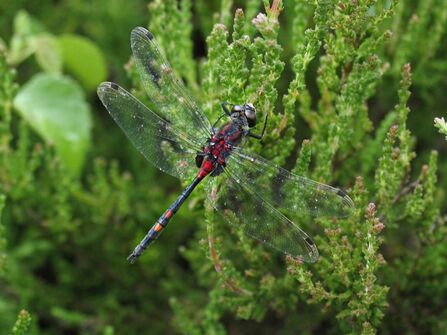
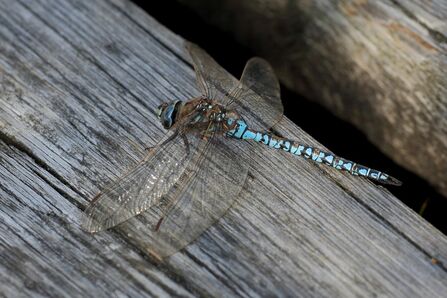
Scotland hosts some of the rarest dragonfly species in Britain and their breeding sites are now under increasing threat from climate change. More extreme weather conditions, especially summer droughts, are drying out fragile bog pool habitats. This is having a profound effect on three species in particular; Azure Hawker, Northern Emerald and White-faced Darter. Permanent water is vital for the survival of the larvae of these three dragonfly species.

Since November 2024, the British Dragonfly Society has been working with landowners and contractors to make hundreds of bog pools more resilient to periods of dry weather. In partnership with a variety of estates, work has been carried out across eight locations, including Mamore Estate, Dundreggan and Glencoe, in the north-west Highlands as part of the Dragonflies on the Bog project. This project, supported by the Scottish Government’s Nature Restoration Fund, managed by NatureScot, follows earlier pilot work with the Corrour Estate on the edge of Rannoch Moor. 

The bog pool restoration uses small peat dams to stem pool outflows and rewet the surrounding area. Floating mats of vegetation are removed to reveal open water, with the removed material often used to cover the new dams. Where necessary, deeper refuge areas are then dug within the pools, so that some water remains for the dragonfly larvae even during extended periods of dry weather.
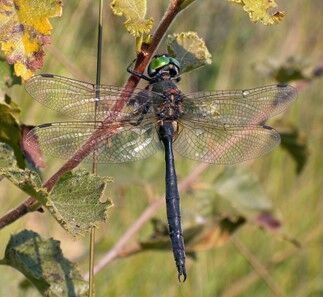
The results of this pool restoration work are already stunning. At Kinloch Woodlands in Wester Ross, where three large pools were cleared of surface vegetation and dammed by hand, both Northern Emerald and White-faced Darter larvae were already present by July 2025. Larvae of a further four species were also found.

During the current project, over one hundred pools were restored at Corrour Estate over the 2024/2025 winter. “Summer surveys of the restoration area found larvae of all three target species, with over 40% of the pools holding Azure Hawker larvae.” said Emma Veitch-Stevens, BDS Project Officer. “This dragonfly spends up to five years in the water before emerging as an adult, so resilient pools are vital.” Larvae of all ages were found in the surveys. It should be noted that larvae can travel between pools if water levels are high enough to connect them. Larvae can also walk between nearby pools.

Azure Hawker, White-faced Darter and Northern Emerald are all Endangered on the newly reviewed Red List for Dragonflies (in prep.), while Common Hawker and Black Darter are classed as Near Threatened. This Bog Pool Assemblage of rare and threatened dragonflies has just been added to the Scottish Biodiversity List, alongside Northern Damselfly, another Endangered species found only in Scotland within the British Isles.

All six species rely on freshwater habitats for survival. Recognition of this Bog Pool Assemblage shows that these species are priorities for maintaining and improving Scottish Biodiversity.