Throughout 2026, the world has experienced unprecedented droughts, wildfires, floods and landslides. Three quarters of people globally now believe climate change is a serious threat to people in their country.
A ‘Conference of the Parties’ or COP is the decision-making body of an international treaty or convention. Organised by the United Nations, COP31 is the largest international summit in the world, where countries come together to agree how to tackle climate change and its impacts. From 9 – 20 November 2026, almost 200 countries are meeting in Antalya, Türkiye to discuss how we limit global temperate increases, transition away from fossil fuel use to renewable sources of energy, and adapt to the impacts of climate change.
When people think about climate change, what springs to mind most often is our use of fossil fuels and their combustion increasing levels of the greenhouse gas carbon dioxide in the atmosphere. Many people understand the role of forests in absorbing carbon dioxide from the atmosphere, but far fewer realise the importance of peatlands.
Peatlands are the world’s largest land-based carbon stores: globally they store more than twice as much carbon as the world’s forests and about one third of all soil carbon, despite only covering around 3% of the Earth’s land surface. As wetland ecosystems, the waterlogged environment in healthy peatlands means the carbon stays locked up in peat soil and slowly builds up over thousands of years as the plants on the surface die and add to the peat layer.
Sadly, around 12 – 15% of peatlands have been drained or degraded by human activities including agriculture, forestry, peat extraction and development. When drained and damaged, peatlands release their stored carbon over time and are unable to keep absorbing it.
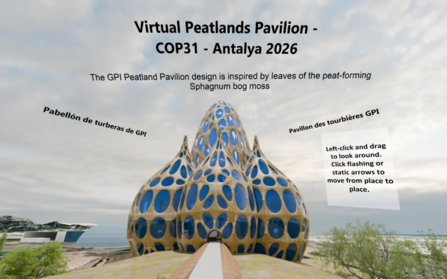
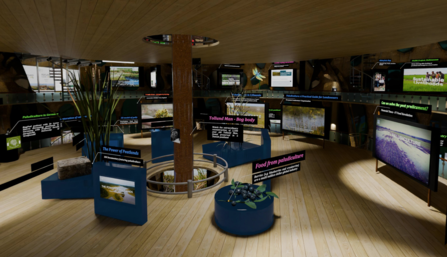
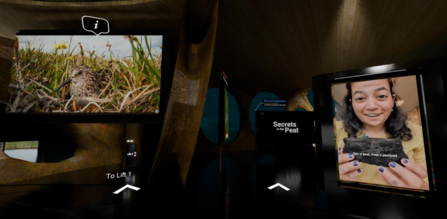
The Virtual Peatlands Pavilion exists to raise awareness of peatlands and their vital role in the fight against climate change. A virtual gallery filled with facts and stories, the pavilion showcases peatlands across the globe and the many organisations working to restore and protect them. Through videos, podcasts, image galleries, 3D tours and more, this immersive platform is home to hundreds of resources.