
Conference poster session. Image credit: Drew Buckley
Conference 2026: Day 1 Programme (9th June)
Swansea University Bay Campus, Wales
Day 1 of #PeatConf26 features a diverse programme of plenaries, posters, exhibitions and networking, as well as the return of our Peatland Cinema.
Sessions take place in the Great Hall at Swansea University Bay Campus, with stunning views of Swansea Bay from the exhibitor and poster galleries and the beach a stone's throw away.
Online tickets are also available for Day 1 plenaries and the Peatland Cinema.
In-person ticket sales have now closed. The deadline for online tickets is midday 3rd June.
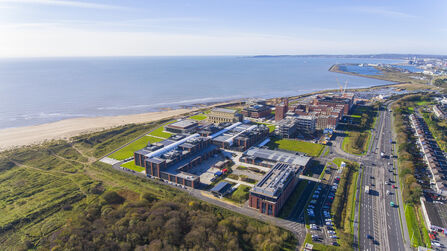
Swansea University Bay Campus. Credit: Swansea University.
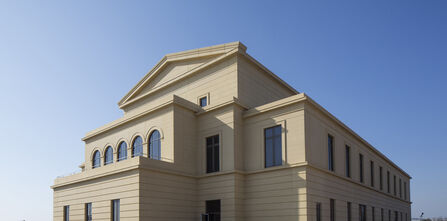
The Great Hall at Swansea University Bay Campus, the venue for our 2026 conference.
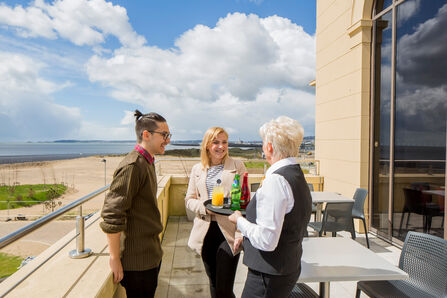
The outside bar at The Great Hall.

Jogging on the beach at Swansea University Bay Campus.
8.30 – 10am Exhibitor set up (West Gallery)
9 – 10.45am Day 1 Delegate registration (Foyer)
Poster set up (East Gallery)
10.15am Refreshments (East & West Galleries)
Day 1 speaker briefs (GH043)
Please ensure you’re seated by 10.55am
11am - 12pm Conference Welcome and Introduction (GH043)
12 – 1pm Lunch (East & West Galleries)
Please ensure you’re seated by 12.55pm
1 – 2.30pm The Sustainable Growth Paradox
(GH043)
2.30pm Refreshments (East & West Galleries)
Please ensure you’re seated by 2.55pm
3 – 4.30pm Peatland Cinema (GH043)
4:30 – 5pm Break
5pm Drinks Reception
5 - 6pm Peatland Code Drop-In Session
(Sir Stanley Clarke Auditorium)
Meet the Peatland Code team and get your queries answered.
5 - 7pm Poster Session (East Gallery)
Exhibition Session (West Gallery)
Visit our exhibition stands and poster display to learn more about the research, restoration and engagement taking place across the peatland community.
7pm Street Food Dinner
(Sir Stanley Clarke Auditorium)
Enjoy our Welsh ingredient-led menu, with three stations and a dessert bar.
Plenary Sessions
Conference Welcome and Introduction
IUCN UK Peatland Programme welcome
Emma Hinchliffe | Director | IUCN UK Peatland Programme
Ministerial video address
Llyr Gruffydd MS | Cabinet Minister for Rural Resilience and Sustainability | Welsh Government
Welcome – Putting peat centre stage in Wales / Croeso i Gymru – rhoi mawn yn ganolog
James Cooke | Head of Agricultural Land Use Policy | Welsh Government
Mannon Lewis | Principal Advisor, Strategic Projects | Natural Resources Wales
‘Crymlyn Am Byth’ – Securing quaking bog and supporting landscapes at Wales’ largest lowland fen for LIFE
Gareth Thomas | Project Manager - LIFEquake | Natural Resources Wales
LIFEquake project site Crymlyn Bog is found quite literally a few hundred metres from our conference venue.
Faced with many hundreds of years of pressure applied in the form of societal advances; establishment of key transportation links; wars; the quest to heat our homes, power our industries and cover up for the awful mess that we so often make….against the odds, this natural paradise remains – right on the edge of Wales’ second city.
In this presentation about triumph over adversity, you’ll hear how LIFEquake have gifted Crymlyn Bog’s mosaic of peatland landscapes a helping hand towards securing the next phase of its fascinating history.
This talk will also showcase other elements of LIFEquake’s work over the last 5 years on transition mire and quaking bog habitat at other their project sites covering the full length and breadth of Wales.
Well-Adapted UK Landscapes
Kim Dowsett | Natural Environment Lead - Land, Agriculture & Nature Team | Climate Change Committee
This talk from the Climate Change Committee will focus on the main findings from the independent assessment for the UK’s 4th Climate Change Risk Assessment and the Well Adapted UK Report – published in May 2026. It will set out the latest evidence on climate risk to the UK with a focus on land - including UK uplands, and adaptation action needed to address these risks.
Work towards a UK Peatland Indicator Framework by Joint Nature Conservation Committee
Hannah McGrath | Senior Advisor – Land Management and Biodiversity | JNCC
Across the UK, peatlands are being restored and managed for a wide range of reasons including nature recovery, climate, water, resilience, and community benefit. As policy shifts towards long‑term outcomes, there’s a real opportunity to bring evidence together in ways that better support future investment and delivery across the UK.
JNCC is developing a UK‑wide Peatland Indicator Framework to help meet that need. The ambition is to bring together a coherent set of indicators that can better demonstrate why peatlands matter to society, support clearer narratives about the benefits peatlands provide, and strengthen the evidence base for sustained, long‑term funding and policy support.
This session will share the journey so far and set out JNCC’s vision for how a shared indicator framework could both support peatland practice on the ground and be shaped by the experience of those delivering it. We are keen to explore how this work could add value to the decisions attendees are making and how real‑world peatland projects, data, and insights could in turn improve and strengthen the framework.
- View Gareth's slides (https://www.iucn-uk-peatlandprogramme.org/sites/default/files/2026-06/Gareth_Thomas_Crymlyn_Am_Byth.pdf)
- View Kim's slides (https://www.iucn-uk-peatlandprogramme.org/sites/default/files/2026-06/Kim_Dowsett_Well-Adapted_UK_Landscapes.pdf)
- View Hannah's slides (https://www.iucn-uk-peatlandprogramme.org/sites/default/files/2026-06/Hannah_McGrath_UK_Peatland_Indicator_Framework.pdf)
The Sustainable Growth Paradox: Can We Resolve the Conflicts Between Development and Peatlands?
This plenary will examine the growing tension between development ambitions (including energy, infrastructure and land use change) and peatland protection across the UK. As new planning frameworks, land-use strategies and national policy statements emerge, decisions about development on peatlands are becoming increasingly complex and contested.
The session will bring together perspectives from policy, planning, development, regulation and academia to explore whether current systems can reconcile climate, biodiversity and societal objectives - or whether change is needed.
Chair
Rob Stoneman | Director of Landscape Recovery | Royal Society of Wildlife Trusts and IUCN UK Peatland Programme Co-Chair
Panel
Jessica Fíor-Berry | Policy Lead | IUCN UK Peatland Programme
Rebbeca Sharp | Countryside and Wildlife Team Leader | Neath Port Talbot Council
Rachel Short | Senior Ecology Manager | ScottishPower Renewables
Peatland Cinema
Our Peatland Cinema features an eclectic mix of thought-provoking and inspiring short films from restoration partnerships, artists and communications experts from across the UK. Join us on a journey of sound and vision exploring Welsh language, musical interpretation of peatlands, young voices and serious messages introduced by the filmmakers.
Programme
When Peat Speaks, introduced by artist Miranda Whall
The Living Layer, introduced by Justine Read, Communications Officer, South West Peatland Partnership
Peatland ACTION Case Study – Glen Dye Moor and Mòinteach na h-Alba dha Muinntir na h-Alba (Scotland’s Peatlands for Scotland’s People), introduced by Kirstin McEwan, Peatland ACTION Project Officer – Communications and Engagement
Wildfire Comms: An experiment to reach young audiences, introduced by Emma Shaw, Programme Manager – Communications, Moors for the Future Partnership
Am I Peat-compatible? Introduced by artist Manon Awst
Peat-Fest South West Manifesto, introduced by Naomi Wright, Art and Energy Collective and Rachael Milliner, RE-PEAT