From Soggy Socks to Ancient Secrets: Why Peatland Pasts Matter for Their Future

Share

From Soggy Socks to Ancient Secrets: Why Peatland Pasts Matter for Their Future

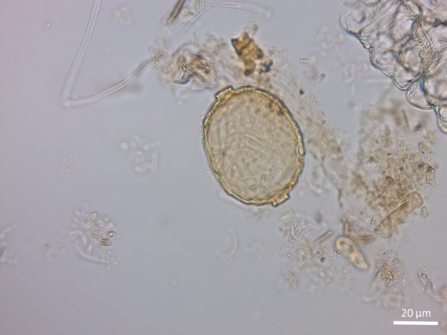
Amphitrema wrightianum, a testate amoeba. Credit: Jessica Gauld / University of Manchester.

Our guest blog from peatland palaeoecologist and PhD student Jessica Gauld dives into the value of looking to the past - and working collaboratively - to guide the future of peatland restoration.

Wet, icy, cold, and much deeper than expected – I’m sure many of you will be familiar with what a misstep on peatland can result in. For me, slipping off a peat bund on a cold February morning was a bit of a shock and resulted in some very soggy socks. However, the beauty of a frost-dusted bog is undeniable and, as I watched deer bound over bunds in the distance, I found myself increasingly invested in these incredible peaty landscapes.

My name is Jessica and I’m a PhD researcher in peatland palaeoecology at The University of Manchester. The story above is from one of the few times that I was actually out on the bog. Usually, I am in the lab looking at the peat from a very different perspective. To put it simply, I look at organic material, such as vegetation, that is preserved deep within the peat to tell a story of the environment over thousands of years. I am also interested in how researchers and practitioners can work together to make that story relevant to present-day management of degraded peatlands. I’m writing for the IUCN UK Peatland Programme because I want to share how amazing and insightful this knowledge of the past can be. Palaeoecology is a pretty niche subject with a lot of potential to be part of evidence-based conservation. If I have learned anything during my PhD, it is the importance of knowledge sharing and building connections across academia and practice.

Jessica leaning over a 50x50cm gridded quadrat covering a hummock of sphagnum moss.

Palaeoecology researcher Jessica Gauld out in the field. Credit: Emma Shuttleworth.

To give you some insight into how I got here, I have always loved Geography as a subject – especially learning about the formation of the natural landscape. At first, I channeled this passion into becoming a Geography teacher. I soon realised that I wasn’t finished with learning and that I missed research. So, I made the decision to leave teaching to pursue my Master’s degree at the University of Manchester. It was during this time that I was really exposed to peatland conservation. Whilst on a peatland fieldtrip, a serendipitous conversation with a ranger sparked the connection between how understanding past environments through palaeoecology could be informative for restoration. The question was, how do we bridge the gap between palaeoecology and conservation practice?  The path was set – I had found my PhD topic!

Before I go further – what is palaeoecology and why does it matter? Palaeoecology aims to reconstruct past environments using biological and geochemical material preserved in sediments. Peatlands are brilliant palaeoecological archives, as the waterlogged and low oxygen conditions reduce decomposition. The build-up of peat over time creates layers upon layers of organic material, such as vegetation and invertebrates, that can be preserved for thousands of years! Palaeoecologists take peat cores and use this preserved material as evidence of environmental change. For example, we might use preserved pollen grains, leaves, seeds, or roots to understand vegetation change, or invertebrates to understand changes in hydrology or temperature. The IUCN UK Peatland Programme's species showcase on testate amoebae explains how this unusual group of organisms contributes to the study of palaeoecology, and features lots of specimens from my PhD.

This record of environmental history can be useful for present-day management of peatlands as it is often the only record of what the peatland was like before human intervention. Palaeo-records also can give us a much longer and less sporadic record of environmental change than might be obtained through historic accounts or monitoring records – giving us a different perspective of how peatlands have responded to past climate change or human activity, such as burning. However, accessing this potential requires researchers and conservation practitioners to work together to create knowledge that is relevant to the needs of the site and feasibly applicable in the management context.

The value of collaboration between academics and practitioners has become a huge research interest of mine. Scientific research is great, but it can only get us so far – if the aim is to inform conservation practice, then science needs to be balanced with practitioner expertise. This is what my recent paper on translational palaeoecology is all about: how palaeoecologists and conservation practitioners can work together to produce relevant and actionable research. This paper was a collaborative effort that brought together practitioners working in conservation and academics working within palaeoenvironmental research, combining our collective experience to produce useable guidance on how to undertake collaborative palaeoecological research.

The output from this paper is a five-phase framework that can be used to guide research-practice collaboration, from designing research questions through to post-research engagement. The key findings are as follows:

  • Encourage academics to attend practitioner meetings. This is a great way of communicating current conservation priorities to academic communities and for academics to promote palaeoecology.
  • Engage with the research process. Practitioner expertise can guide research questions so that they are suited to management needs and ensure that research outcomes are practically achievable in the context of conservation funding, time, and wider policy.
  • Practitioners and academics should work together to produce and communicate easily digestible case studies. This is a key way of communicating the practical value of palaeoecology for conservation.

For me, the next steps are to continue to build active partnerships with conservationists and further the use of palaeoecology in evidence-based peatland conservation. More widely, we need to refine our communication of palaeoecological research and more consistently record our collaborative efforts - there is lots of exciting work to be done.